Rabbit Font: Adding Playful Ears and Tails to Your Designs
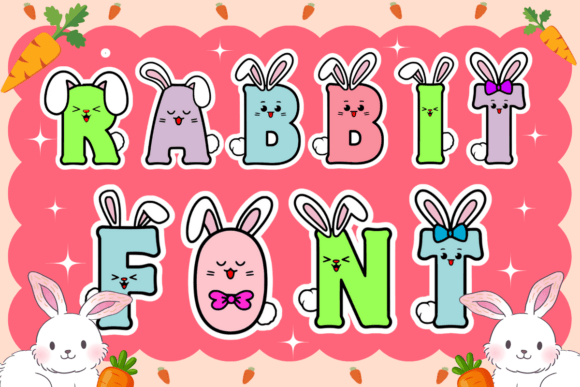
You know the feeling. You're scrolling through a sea of clean, minimalist sans serif fonts, looking for something with a bit more personality. Something that doesn't just sit on the page but wiggles its nose at you. Enter Rabbit, a display typeface that takes the concept of a "fun font" quite literally. Every letterform in this typeface comes adorned with subtle, charming details—think tiny bunny ears on ascenders and whimsical, curling tails on descenders. It’s not just a font; it’s a character waiting to hop into your next project.
As a designer, I’m always wary of novelty fonts that sacrifice legibility for gimmicks. Rabbit, however, strikes a clever balance. The structural integrity of the letterforms remains solid, ensuring that while the decorative elements are playful, the text doesn't become a puzzle to solve. The "ears" and "tails" are integrated with a light touch, making it a versatile display font rather than a one-trick pony—or bunny, in this case. It’s the kind of premium font that injects joy without overwhelming the core message, making it a valuable addition to any creative’s toolkit.
Where Does Rabbit Thrive? Real-World Applications
Understanding a font’s personality is key to deploying it effectively. Rabbit isn’t your go-to for a corporate law firm’s annual report. Its charm lies in its ability to evoke warmth, innocence, and playfulness. This makes it a natural fit for brand identity work aimed at children, families, pet services, or any brand that wants to project a friendly, approachable image. Imagine a local bakery’s logo using Rabbit for its wordmark—instantly, you feel the whimsy and homemade quality of their products.
Beyond logo design, Rabbit shines in packaging design. For a artisanal candy brand or a line of organic baby products, using this typeface on labels and boxes creates an immediate emotional connection. It tells a story before the customer even reads the product name. In the digital realm, it’s fantastic for social media graphics where stopping the scroll is paramount. A quote card or a promotional post using Rabbit’s distinctive lettering can stand out in a feed full of generic text, boosting engagement through sheer visual delight.
For editorial design and web design, context is everything. You wouldn’t set a long paragraph in Rabbit, but for chapter titles in a children’s book, a blog header for a parenting site, or the hero text on a landing page for a pet adoption agency, it’s perfect. It works beautifully in print on invitations for a baby shower or a first birthday party, and in digital contexts like e-book covers or newsletter banners. The key is to use it as an accent—a burst of personality—paired with more neutral serif or sans serif fonts for body copy.
Practical Guidance: Choosing and Using Rabbit
So, you’re considering Rabbit for a project. How do you evaluate if it’s the right fit? First, look at your audience. If your target demographic is adults 20-50 with a penchant for nostalgia, whimsy, or family-oriented content, it’s a strong candidate. If your project requires a tone of serious authority or cutting-edge modernity, you’ll likely want to steer clear. Always test the font in context. Mock up a quick logo or a social media post with your actual copy to see how the playful details interact with your specific words.
One of the most important steps is mastering font pairing. Rabbit’s ornamental nature means it needs a grounding partner. A clean, geometric sans serif font like Montserrat or Lato makes an excellent companion for body text, providing clarity and contrast. For a slightly softer feel, a friendly script font or a rounded handwritten font could work for subheadings, but be cautious not to create a visual cacophony. The goal is harmony: let Rabbit be the star, and use your supporting fonts to ensure the message is easily consumed.
Before purchasing, check what’s included in the license. Does it come with multiple weights or styles? Is it a commercial font with a license that covers your intended use, whether for a single client project or unlimited commercial work? Reviewing the character set is also wise—does it include the punctuation and symbols you need? A high-quality creative font like Rabbit will often include alternates, ligatures, and extended language support, which are fantastic for adding unique flair to design assets and ensuring consistency across all your brand identity materials.
Ultimately, Rabbit is more than just a collection of letters with decorative ears. It’s a tool for storytelling. In a world saturated with serious, polished modern typography, it offers a refreshing dose of character. Used thoughtfully, it can elevate a design from merely functional to memorably engaging, creating a brand perception that is friendly, creative, and full of life. So, if your next project calls for a touch of whimsy, let Rabbit hop in and see what kind of magic it can create.