Gdt1: A Typeface with Analog Soul
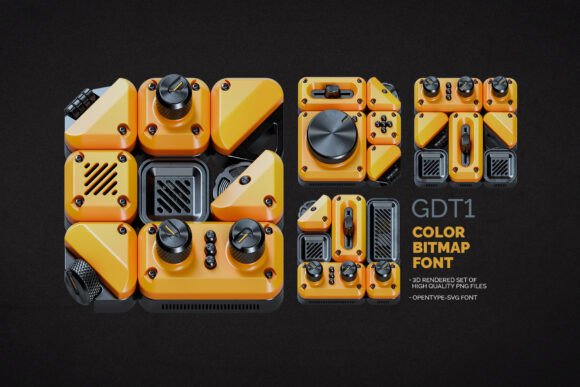
In a design landscape often dominated by clean sans serifs and elegant serifs, it’s refreshing to find a typeface with genuine grit and personality. Gdt1 is precisely that—a premium font that feels less like digital lettering and more like a collection of vintage hardware. It’s a creative font inspired by the tactile world of analog audio equipment, industrial control panels, and retro electronics. Each character is a miniature 3D-rendered scene, constructed from familiar components like bolts, dials, sliders, and toggle switches. This isn't just a display font; it's a design system that brings a powerful, mechanical aesthetic to any project it touches.
Built for Impact: Where Gdt1 Truly Shines
The strength of Gdt1 lies in its immediate visual impact. This makes it an exceptional choice for projects where grabbing attention is the primary goal. Think of poster design for a music festival, the title treatment for a tech-themed podcast, or the hero text on a website for a hardware startup. Its 3D-rendered, puzzle-like construction gives it a depth and texture that flat fonts simply can’t match. The typeface carries a distinct personality—mechanical, precise, and slightly nostalgic. It evokes a sense of hands-on craftsmanship and robust engineering, which can be incredibly valuable for brands in the maker space, craft brewing, or specialty coffee industries looking for an authentic, non-corporate voice.
For logo design, Gdt1 offers a unique opportunity to build a brand mark that is inherently distinctive. Its letterforms are so detailed and characterful that they can serve as the central visual element. A logo set in Gdt1 for a custom guitar pedal company or a vintage synth repair shop would instantly communicate the brand's ethos without a single word of explanation. In packaging design, it can make a product stand out on a crowded shelf, especially for items targeting a niche audience that appreciates detail and retro-futurism. The font’s strong visual presence makes it ideal for headlines, pull quotes, and feature titles in editorial design, adding a layer of graphic interest to magazine layouts or book covers.
Practical Considerations for Effective Use
While Gdt1 is visually stunning, its complexity demands thoughtful application. As a display font, it is not designed for body copy. Its intricate details would become a jumbled mess at small sizes, severely hindering readability. The key is to use it strategically for headlines, logos, and short, impactful phrases where its full character can be appreciated. For longer text, you’ll need a complementary font pairing. A clean, simple sans serif font or a neutral serif font for supporting copy creates a perfect contrast, allowing Gdt1 to command attention without overwhelming the viewer. This balance is crucial for establishing a clear visual hierarchy.
When evaluating if Gdt1 is the right fit for your project, consider your brand identity and audience. Does your brand narrative involve technology, engineering, vintage aesthetics, or DIY culture? If so, this font could be a perfect match. For a tech blog, a series of social media graphics using Gdt1 for key quotes could build a strong, recognizable visual style. For a small business designing event flyers, it can lend an immediate sense of cool and technical expertise. Always test the font in context. Create mockups to see how it interacts with your color palette, imagery, and other design assets. Review any included styles or weights, as variations might offer different levels of texture or depth. Finally, always confirm the commercial font licensing aligns with your intended use, whether for a client project, merchandise, or digital products.
A Unique Tool in Your Creative Toolkit
Gdt1 is more than just another typeface; it's a statement piece. It fills a specific niche in modern typography for designers seeking a textured, 3D, and mechanically-inspired aesthetic. It can elevate a brand's perception from generic to specialized, transforming simple web design elements or print materials into engaging visual experiences. By understanding its strengths—its incredible detail and personality—and its limitations—its suitability for display use only—you can leverage Gdt1 to create memorable, professional, and highly engaging designs that truly stand out. It’s a valuable asset for anyone looking to inject a dose of analog soul into their digital or print projects.